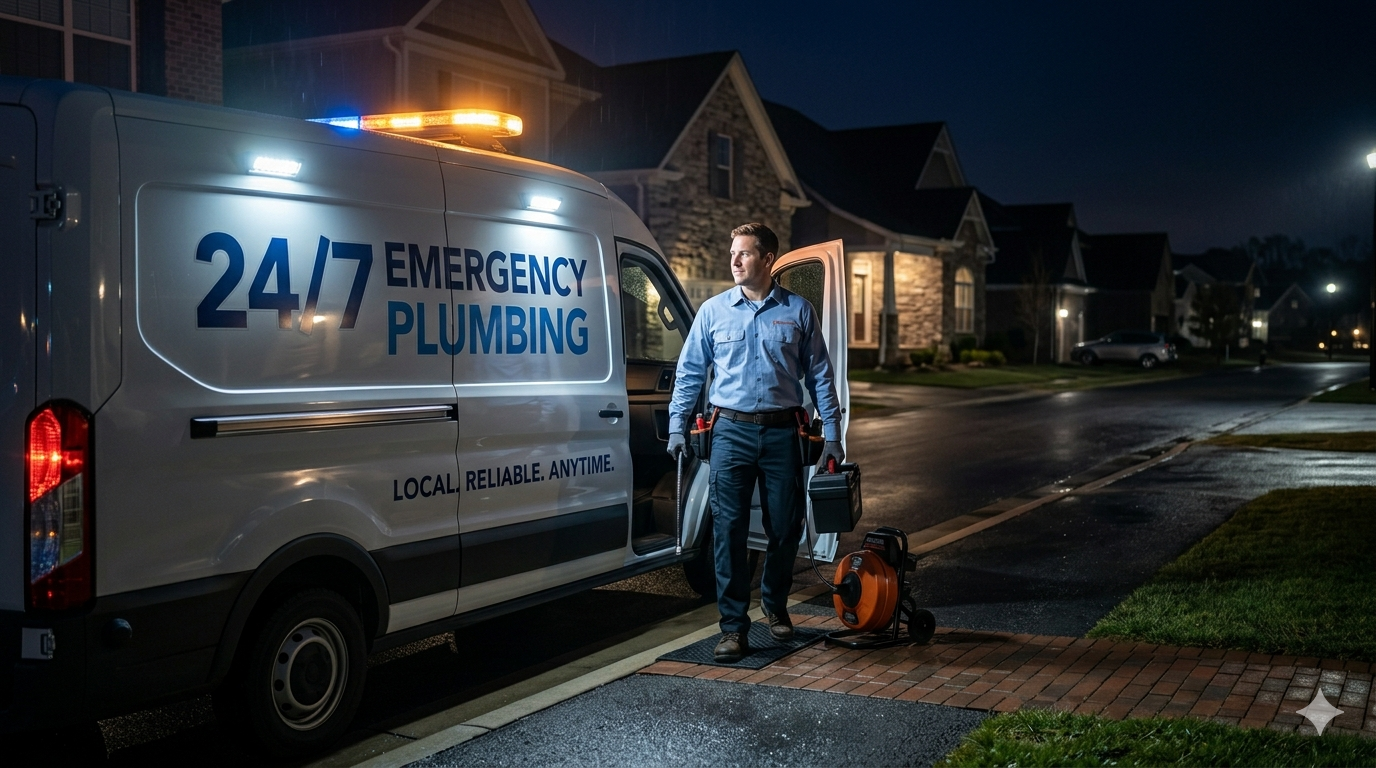
You stepped into the shower, waited, adjusted the handle — and it never got warm. If you have no hot water coming from your shower, the cause could be your water heater, your shower valve, or something in between. As expert plumbers serving High Point and Guilford County, we walk through this diagnosis every week. Here's how to figure out what's actually wrong — and whether you can fix it yourself or need to call a plumber.
The First Thing to Check: Is It the Shower or the Whole House?
Before assuming your water heater is the problem, do a quick test: turn on a hot water faucet somewhere else in your home — a bathroom sink, the kitchen, anywhere. If hot water flows normally at that faucet but not in the shower, the water heater is almost certainly fine. Your problem is inside the shower itself — specifically the valve.
If there's no hot water anywhere in the house, the water heater is the source. That's where to start your diagnosis.
No Hot Water Anywhere in the House: Water Heater Causes
Your Pilot Light Went Out (Gas Water Heaters)
Gas water heaters rely on a standing pilot light or electronic ignition to fire the burner. If the pilot light goes out — from a draft, a gas interruption, or simply age — the burner can't heat the tank and you lose hot water entirely.
On most gas water heaters, you can relight the pilot yourself by following the label on the unit. The process typically involves turning the gas knob to "Pilot," pressing it down to release gas, igniting it with a lighter or the built-in igniter, and holding the knob down for 30–60 seconds until the thermocouple heats up enough to keep the valve open. If the pilot lights but won't stay lit when you release the knob, the thermocouple is failing and needs to be replaced — a repair that costs roughly $150–$250 through a plumber and is almost always worth doing on a unit under 8 years old.
A Tripped Breaker (Electric Water Heaters)
Electric water heaters are powered by two heating elements — one near the top of the tank and one near the bottom. If the circuit breaker for the water heater has tripped, neither element can run and you'll have no hot water at all.
Go to your electrical panel, find the breaker labeled "water heater," and check whether it's tripped to the middle position. Reset it by flipping it fully off, then back on. If it trips again within a few hours, don't keep resetting it — a breaker that keeps tripping is telling you there's an underlying electrical issue, and you need a qualified electrician or plumber to diagnose it before it becomes a fire hazard.
A Failed Heating Element (Electric Water Heaters)
If the breaker is fine but you still have no hot water, the upper heating element has likely failed. On an electric water heater, the upper element controls the first rush of hot water. When it fails, the lower element can't compensate fully and hot water runs out almost immediately — or doesn't come at all.
Replacing a heating element costs $200–$350 through a plumber. If your electric water heater is under 10 years old and has otherwise performed reliably, a heating element replacement is a reasonable repair. If it's older than 10–12 years, the math usually favors replacement.
Sediment Buildup Has Overwhelmed the Tank
High Point's water has moderate hardness — enough that mineral deposits accumulate on the floor of your water heater tank over time. When sediment builds up heavily, it insulates the burner flame or heating element from the water above it, making it impossible to heat the tank efficiently. You may notice a popping or rumbling noise from the water heater in the months before this becomes a problem — that's water percolating through the sediment layer.
Flushing the tank annually can prevent this. If it's already severe and the unit is 8 or more years old, replacement is usually the better call.
The Water Heater Has Simply Failed
Storage tank water heaters last 8–12 years for gas and 10–15 years for electric under normal conditions. In High Point, where homes built from the 1970s through the mid-1990s represent a large portion of the housing stock, there are many water heaters that are at or well past their service life. If yours is older and has stopped producing hot water without an obvious pilot or breaker explanation, the tank may have corroded internally or the gas valve may have failed — and at that point replacement is almost always the right answer.
No Hot Water Only in the Shower: Valve Problems
If your hot water works fine at every other fixture and the shower is the only place you get cold, the water heater is not the issue. You have a shower valve problem.
The Anti-Scald Valve Is Restricting Hot Water
Most shower valves installed in the last 30 years include an anti-scald device — a small plastic component that limits how far the handle can rotate toward the hot side. This is a required safety feature designed to protect children and elderly users from scalding burns.
The problem is that these limit stops can be set too conservatively during installation, or they can shift over time. The result is a shower that physically can't deliver water above a lukewarm temperature even when the hot water supply is working fine.
The fix is simple: adjust the limit stop inside the valve trim. This typically requires removing the handle and the decorative cover (trim plate), locating the plastic limit stop, and rotating it to allow a greater range of travel toward hot. This is a DIY-accessible repair if you're comfortable with basic plumbing work and can identify your valve brand. If you're not sure, a plumber can diagnose and adjust it in under an hour.
The Shower Cartridge Has Failed
Inside every modern shower valve is a cartridge — a self-contained component that controls the mix of hot and cold water based on handle position. When the cartridge wears out or its internal seals fail, it can lose the ability to route hot water properly. You may still get water flowing, but it stays cold or barely warm no matter where you set the handle.
Cartridge replacement is the most common shower valve repair. The cost through a plumber typically runs $150–$300 depending on the valve brand and cartridge cost. Moen, Delta, and Kohler cartridges are widely available; some proprietary brands cost more. If your shower valve is 15+ years old and the cartridge has failed, it's worth considering whether a full valve replacement makes more sense.
The Hot Water Supply to the Shower Is Blocked or Closed
Less commonly, the hot water supply valve to the shower may have been partially closed — during a past repair, a renovation, or by accident — and never fully reopened. If your home has accessible shutoff valves for individual fixtures (common in homes with a manifold system or newer construction), check that the hot side valve to the shower is fully open.
When to Repair vs. Replace Your Water Heater
If the diagnosis points to your water heater, here's a straightforward framework for the repair-or-replace decision:
Under 5 years old: Almost always repair. A unit this young failing is unusual and the repair is almost always cost-effective.
5–8 years old: Repair if it's an element, thermocouple, or thermostat. These are simple, relatively inexpensive repairs and you have years of useful life remaining.
8–10 years old: Evaluate carefully. Compare the repair cost against the fact that you may have 2–4 years of life left. A major repair (gas valve, full element replacement + thermostat) on a 9-year-old unit may not be the best investment.
Over 10 years old: Lean strongly toward replacement. Most repairs at this age delay the inevitable. You're also leaving efficiency savings on the table — a new unit may reduce your water heating costs by 15–30%.
Any age with a tank leak: Replace immediately. A leaking tank cannot be repaired. Once the tank itself corrodes through, the unit must go.
When to Call a Plumber in High Point
Some no-hot-water situations are safe to troubleshoot yourself. Others aren't.
Try it yourself:
- Relighting a gas pilot light (follow the manufacturer's label exactly)
- Resetting a tripped breaker (once — don't keep resetting a breaker that keeps tripping)
- Adjusting the anti-scald limit stop on a shower valve
Call a plumber:
- Pilot light won't stay lit after relighting (thermocouple failure)
- Breaker trips repeatedly after resetting
- Any smell of gas near your water heater — leave the house and call your gas company before calling a plumber
- Water heater is leaking from the tank body
- Shower valve cartridge replacement (it's technically doable DIY, but the wrong cartridge or a damaged valve seat can make things worse)
- Your water heater is 10+ years old and has stopped working
In North Carolina, water heater replacements require a permit and must be performed by a plumber. Guilford County inspects permitted water heater installations — which protects you, ensures the work is code-compliant, and matters when you sell your home. Be cautious of any contractor who offers to replace your water heater "without the hassle" of a permit. That's not a shortcut — it's a liability.
Frequently Asked Questions
Why does my shower have no hot water but my sink does?
If hot water works at your sink but not your shower, the water heater is fine. The problem is in the shower valve itself — most commonly a failed cartridge, an anti-scald limit stop set too restrictive, or a closed supply valve. A plumber can diagnose this in a single visit and usually repair it the same day.
How long should a water heater last in High Point?
Gas storage tank water heaters typically last 8–12 years. Electric storage tanks last 10–15 years. Tankless water heaters — gas or electric — last 15–20+ years. High Point's moderately hard water accelerates sediment buildup, which can shorten tank life if the unit isn't flushed annually. If yours is at or past these ranges and has stopped producing hot water, replacement is almost always the right call.
Can I relight my gas water heater pilot light myself?
Yes, and in most cases it's safe to do so. Follow the instructions printed on the label of your water heater exactly — they're specific to your unit. Turn the knob to "Pilot," press and hold it down, ignite the pilot, and hold for 30–60 seconds. If it won't stay lit after two or three attempts, stop and call a plumber. A pilot that won't hold is almost always a failing thermocouple, not something to keep troubleshooting yourself.
Why does my hot water run out so fast in the shower?
If you get a few minutes of hot water and then it goes cold, the water heater isn't completely down — it's struggling. The most common causes are a failed lower heating element (electric), heavy sediment buildup at the bottom of the tank, or a tank that's simply undersized for your household. A plumber can test the elements and flush the tank to determine whether repair or replacement makes sense.
Does replacing a water heater in High Point require a permit?
Yes. Under North Carolina plumbing code, water heater replacements require a permit and must be done by a plumber. Guilford County handles inspections for most High Point properties. A experienced contractor will handle the permit as part of the job — if someone is offering to do the work without one, that's a red flag.
What is an anti-scald valve and why would it stop hot water in my shower?
An anti-scald valve (sometimes called a pressure-balancing valve or thermostatic mixing valve) is a safety device built into your shower valve that prevents the water from getting hot enough to burn you. It includes a "limit stop" — a small plastic piece that restricts how far the handle turns toward hot. If this limit stop is set too conservatively, it physically blocks the handle from reaching full hot, leaving you with lukewarm water even when your water heater is working perfectly. Adjusting it is usually a straightforward repair.
Should I get a tankless water heater when I replace my current one?
Tankless water heaters offer real advantages — longer lifespan (15–20+ years), endless hot water, and 24–34% better efficiency for typical usage. The honest trade-off is higher upfront cost: expect $800–$1,500 for the unit plus $500–$1,500 for installation, and potentially an additional $1,000–$2,000 for electrical service upgrades if you go electric tankless. Gas tankless units also require a dedicated gas line and proper venting. For many High Point homeowners replacing an aging tank, a high-efficiency storage tank (55-gallon hybrid or top-tier gas) is a cost-effective middle ground worth discussing with your plumber.
Still No Hot Water? Call a High Point Plumber Today
Whether the problem is your water heater, your shower valve, or something else entirely, a plumber can diagnose it on the first visit. If you're in High Point or anywhere in Guilford County and you're dealing with no hot water, call us at 336-422-7560. We're available for same-day service and will give you a straight answer on whether repair or replacement makes the most sense for your situation.


